Sunday, November 10, 2013

Relationship Help

As we explain in the book, our new theory defines four basic ways that people can think and behave: in Mover, Stimulator, Perceiver or Adaptor Mode. You can quickly identify your own dominant mode by taking a simple 20-question, automatically scored test. 

Identifying your mode can help you better understand how you and the people around you own behave and approach the world, whether on the job, at home, in social situations -- or in your romantic and intimate relationships. Whether you have been in a relationship for a long time, or are just starting -- or wondering if she or he is right for you before taking the next step -- we believe Top Brain, Bottom Brain can help you.

Here is an excerpt from the book, which you can order here. Thanks to April Masini for prompting us to post this!

Thinking Twice
 by 
Stephen M. Kosslyn and G. Wayne Miller.

Ideally, you would have time to reflect on the perspectives presented in this book before beginning a new job or entering a new social or personal relationship. According to the theory (and we again remind you that it is a theory), someone who was prone to being in Stimulator Mode might want to pause to think carefully about marrying someone who also was prone to being in Stimulator Mode—such a union could easily produce a marriage rife with conflict. Two people who typically operate in Adaptor Mode might want to reflect on what a marriage would be like if much of the time “nothing is happening” or the situation is constantly careening or being buffeted by events. Imagine how things might be different for Nick and Erica, the characters we created for chapter 12, if Erica, like her husband, habitually thought and behaved in Adaptor Mode and not in her dominant Mover Mode; with the demands of running the household and managing the couple’s three young children, it might be chaotic.

Although two people who habitually operate in Perceiver Mode might have a low-stress relationship, achieving goals that require detailed or complex planning could prove challenging. Picture Hannah and Rick, the characters from chapter 10. If Rick habitually thought and behaved in Perceiver Mode, as Hannah does, the two of them would enjoy a comfortable life—but as they neared their sixties, would either of them have made the financial decisions necessary to ensure a comfortable retirement? The point is not that Hannah (or any librarian) is incapable of long-term financial decision making, only that this is not likely to be her natural inclination—but it is where Rick’s dominant cognitive mode advances the couple’s shared interests.

Similarly, the theory leads us to expect that if a person habitually operates in Perceiver Mode in the professional world, it might be most comfortable for him or her to work with people who often are in Perceiver or Adaptor modes. But, comfort aside, this often would probably be less than ideal. Arguably, most teams would benefit by having some members who are comfortable and adept in Mover Mode, others who are comfortable and adept in Adaptor Mode, and so on. For example, people who prefer to operate in Perceiver Mode would get a lot out of working with those who prefer Mover or Stimulator modes, and vice versa.

In order to change your dominant mode, you need to be highly motivated, have a lot of time, and stick to the effort—and even then, this change will probably affect your functioning only in a particular domain. Not everybody is so patient. In most cases, we suspect that you probably would be better off identifying your dominant cognitive mode and finding people who have dominant modes that complement your own. And remember that a person’s mode may be different in different circumstances (which draw on different sets of knowledge)—a person comfortable with Mover Mode at work may be most comfortable in Adaptor Mode at home, and a person who usually operates in Stimulator Mode with friends may slide into Perceiver Mode with a mate. Thus, if our theory is on the right track, be sure to spend time with a person in the appropriate circumstances if you are seeking compatibility. 

Some readers of this book will find themselves already in problematic situations. What then? The Theory of Cognitive Modes cannot provide definitive guidance, but knowing about the four modes can make you sensitive to certain potential problems before you become involved with someone. Moreover, the theory implies that you can become an expert on someone close to you. And learning to predict his or her likely reactions can help you operate in Perceiver and Mover modes, which can make a difficult situation manageable. If you don’t have the motivation or time to learn how to cope, seek a friend (or counselor) who can complement your strengths, filling in for what you cannot do easily. Here, again, would be the value of relying on an appropriate social prosthetic system.

Working well with others is arguably the most important thing most of us do. There are two clear keys to success: The first is to grow, by learning new strategies (ways to plan and behave, using the top-brain system) and learning new ways to “frame” a situation (ways to classify and interpret, using the bottom-brain system). The second is to change your circumstances, whether work, home, or social setting. In any given situation, you can use one of these two keys to open a new door.

From “Working With Others,” Chapter 14, Top Brain, Bottom Brain:Surprising Insights Into How You Think. Simon & Schuster, November 2013. ©Copyright 2013 Stephen M. Kosslyn.

Friday, November 1, 2013

THINKING SPORTS: NFL, NASCAR, NBA, NHL, MLB and more...


Thinking Sports
by G. Wayne Miller and  Stephen M. Kosslyn

>> Are you a Mover? Stimulator? Perceiver? Adaptor? Take the test! <<

Ever wonder why two professional sports players of arguably equal and great talent wind up with such different results? For example, veteran NASCAR Sprint Cup champions Matt Kenseth, a model of consistency, and Kurt Busch, whose career has followed an erratic path?

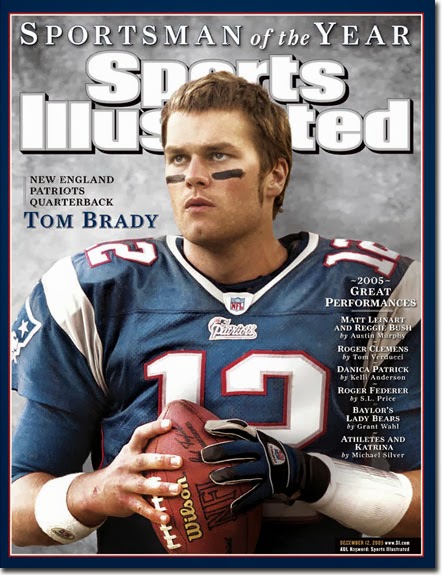
Or why, beyond their different skill sets, is an athlete like Tom Brady so natural as the quarterback of the New England Patriots whereas a Stephen Gostkowksi is content to play a supporting role -- albeit an important one?

Or how during the World Series Red Sox catcher David Ross could so easily step in for the poor-hitting starter Jarrod Saltalamacchia – and so seamlessly pair with ace pitcher Jon Lester to send the Sox back with a 3-2 Fall Classic lead from St. Louis to Fenway, where he paired with John Lackey to help bring Boston its third world championship in nine years?

We suggest an answer may be found in a new theory of psychology – in our new Theory of Cognitive Modes, which we for the first time in TOP BRAIN, BOTTOM BRAIN: Surprising Insights Into How You Think, published by Simon & Schuster on Nov. 5.

Based on decades of research that so far has largely remained inside scientific circles, the theory is based on an often overlooked anatomical division of the brain: into its top and bottom parts (we explain in the book why the popular left brain/right brain story has no substantial basis in science). According to our theory, the top and bottom systems of the brain carry out different functions. The top system sets up plans, controls movements, registers changes in where objects are located in space, and revises plans as actual results of the plan unfold. The bottom system classifies and interprets what we perceive. The neuroscience behind this is more detailed, of course, but in a nutshell, those are fundamental facts about how the brain really works.

All of us use both parts of the brain, but we vary in the extent to which we tend to rely on each system for functions that are optional -- are not dictated by current circumstances, such as what you do when walking from your bedroom to the kitchen. Nothing in the external environment forces you to make detailed and subtle plans, or to ponder the meaning of something in your mind—these sorts of optional functions are up to you, whether you’re a carpenter, a librarian or an athlete.


Four Modes of Performance

Our theory defines four cognitive modes, depending on how much a person uses the top and bottom brains in optional ways.

-- MOVER MODE results when a person uses both the bottom and top systems in optional ways. People who habitually rely on Mover Mode typically are leaders, and prefer situations in which they can plan, act, and be able to react to the consequences of what they do, according to our theory.
Does this not characterize Brady (or any good quarterback, for that matter)? Watch how he reads a defense, executes a play, and reacts if a play goes awry. We would argue that Kenseth, Rookie of the Year in 2000, and 2003 champion in NASCAR’s top series – a 31-race career winner and Cup Chase leader going into the November 3 AAA Texas 500 – also fits this profile. Watch him make pit stops at Bristol, or steer his way out of trouble at Talladega. He plans, acts, and reacts properly to ever-changing conditions on the track and on pit row.

In basketball, point guards frequently display this same leadership behavior. Think Chris Paul of the Los Angeles Clippers as a good example, and also the San Antonio Spurs’ Tony Parker. Centers in pro hockey often exemplify Mover behavior. Sidney Crosby, captain of the Pittsburgh Penguins fits the description (no coincidence that someone who operate in Mover Mode would be captain, by the way). Among retired players, Wayne Gretzky, arguably the greatest hockey player ever, consistently showed Mover Mode tendencies on the ice.


-- STIMULATOR MODE results when a person uses the top system in optional ways -- but not the bottom. Someone relying on Stimulator Mode may come up with original and intricate plans, but because they don’t adjust their plans well based on feedback, they may stick with their own plans too long and can interfere with others' plans, according to our theory. 

NASCAR driver Kurt Busch seems to typify this type of behavior. The 2004 champion, Busch has unquestionable talent and when he gets behind the wheel, he certainly has a plan: win. But when others get in the way of that plan, and that is a given in motor racing, he sometimes reacts in self-defeating fashion. His altercations with other drivers are legendary: the Busch Wikipedia entry includes pages of events labeled “Controversies.” These disruptions are part of the reason he has raced for four different owners since his rookie year, 2001. 

Other sports professionals who demonstrate Stimulator behavior include the Celtics’ Rajon Rondo and retired tennis great John McEnroe, whose tantrums and outbursts are legendary. Their athleticism remains unchallenged, but their disruptive behaviors sometimes have overshadowed their performances.


-- PERCEIVER MODE results when a person uses the bottom system in optional ways -- but not the top system in such ways. People who habitually rely on Perceiver Mode should try to significantly understand what they perceive, placing their experiences into context and finding the implications of such experiences, according to our theory. Wisdom seems to come naturally.

During his many years behind the plate, the Sox’ Ross, 36, has demonstrated exceptional poise and baseball smarts, on-field and off, serving as a mentor for younger player. Boston globe writer Nick Cafardo perhaps put it best when he wrote of Ross “orchestrating Jon Lester to a brilliant performance in a 3-1 win over the Cardinals” in Game 5 of this year’s World Series." “He rarely makes mistakes, and calls a great game,” Cafardo wrote. The same can be said for other superb catchers. The Sox’ Carlton Fisk and the Yankees’ Yogi Berra, who called Don Larsen to a perfect game in the 1956 series, immediately come to mind.

Although they must have lightning-quick reflexes, the best soccer keepers show Perceiver behavior as they analyze the action in front of them. So, too, with the finest hockey goalies. Henrik Lundqvist of the New York Rangers and the Los Angeles Kings’ Jonathan Quick likely would not have achieved greatness without demonstrating Perceiver thinking.


-- ADAPTOR MODE results when a person uses neither the top or bottom system in optional ways. When thinking in this mode, a person does not become absorbed in creating new plans and doesn't spend much time trying to understand their experiences in significant depth. Nonetheless, they can be valuable team members, because they can easily conform to others' plans, according to our theory.
How many of the best linemen in football fit this description? Or “supporting” players on any team, for that matter? The Pats’ Gostkowksi typifies Adaptor Mode thinking and behavior, as does Dwayne Wade, Miami Heat shooting guard.


Balance, Teamwork

Love or hate them, the New England Patriots – with their five Superbowl appearances (three wins) and nine divisional playoff games (seven wins) – in the last dozen years have certainly established themselves as one of the dominant NFL teams of our time. Smart drafting, managing and coaching (not to mention a hefty payroll) deserve much of the credit. So, too, the abilities and skills of Patriots players. 

But New England is hardly the only team with such attributes. Another factor in the Pats’ winning mix, we would argue, has been how the team has achieved balance among the four Cognitive Modes -- with strengths complementing weaknesses. We propose that a complex enterprise – and a football team certainly fits that description – may function best when such balance is maintained.
So when the whole team is considered, we find that, like his quarterback Brady, head coach Bill Belichick almost always acts in Mover Mode.


Over the years, his assistant coaches have typically exemplified Perceiver Mode: analyzing and interpreting, and making sure their boss benefits from their perceptions. Past and present, we find other examples of Mover Mode behavior in the actions of Patriots’ middle linebacker: notably the two-time All-Pro Tedy Bruschi, and the starter at that position now, Brandon Spikes.
Leading the list of players who have seemed to exemplify Stimulator behavior is former wide receiver Randy Moss, an explosive player who, like Kurt Busch, has not always registered the consequences of his actions, on and off the field.

The list of Patriots Adaptors is long. Their names aren’t always in the headlines, like the quarterback, running backs and wide receivers who make the big plays -- but players such as left guard Logan Mankins, five-time Pro Bowler, with the team since his rookie year, 2005, and defensive tackle Vince Wilfork, with the team since 2004, have been the glue keeping the Patriots together. Never underestimate the importance of team players.


What does it mean for you?

We did not test any of these people to assess their preference for Mover, Stimulator, Perceiver or Adaptor Mode thinking. We made our best judgments from afar, based on their public behavior.
But had they consented, they could have taken a scientifically validated, 20-question test that we offer in the book -- and online, at www.TopBrainBottomBrain.com -- that determines an individual’s dominant mode.

You can take it, too. And whether you are an athlete or a coach, seeking to better understand your own and others’ sports behaviors -- or someone seeking to improve your understanding of  you own behaviors and those in your world, the insights gleaned could be useful. They could apply to your relationships at work, at home and in your social life.

As basketball great Kareem Abdul-Jabbar said: “One man can be a crucial ingredient on a team, but one man cannot make a team.”

G. Wayne Miller is an author, filmmaker and Providence (R.I.) Journal staff writer. Visit him at www.gwaynemiller.com. Stephen M. Kosslyn is a cognitive neuroscientist and was professor of psychology at Harvard University for over 30 years; he now serves as the founding dean of the Minerva Schools at the Keck Graduate Institute.

Wednesday, October 23, 2013

Upcoming events

-- Wayne will be speaking about the book on Wednesday evening, October 30, at the Comedy Connection in East Providence, Rhode Island -- as a participant in the Providence Pecha Kucha no. 55. These are always fun evenings, with a range of interesting presentations. So please join us! Doors open at 7:20 p.m. (ET) and presentations start at 8:20 p.m. More details at the Top, Bottom Facebook page.

-- At 7:50 a.m. (ET) Saturday. Nov. 2, Wayne will be a guest of Steve Klamkin, News Talk 630 WPRO-AM, serving southern New England, and also on the Web.

-- Two days later,  Wayne will be presenting and signing books at the Providence Public Library-hosted official book launch, on the eve of publication. The library launch event is free and open to the public and begins at 7 p.m. (ET), Monday, November 4. Details here.

-- On Tuesday, Nov. 5, day of publication, Wayne will be a guest at 4 p.m. (ET) on the Dick Morris radio show, broadcast on Talk Radio AM-1210, WPHT, a CBS affiliate in Philadelphia. The show is also streamed on the Web.

--Also on Tuesday, Nov. 5, Wayne will appear at 5:30 p.m. (ET) on The Mary Jones Show, broadcast on Hartford's WDRC, AM-1360 and FM-102.9-3.

-- And on Tuesday, November 12, from 7 p.m. to 8:30 p.m. (PT) Stephen will be speaking at The Commonwealth Club in Santa Clara, California. Details here.

Stay tuned for more!

The Providence (R.I.) Public Library.

Monday, October 21, 2013

One of Italy's leading paper runs story after Wall Street Journal

Corriere della Sera, published in Milan, was among the outlets that picked up on the Wall Street journal weekend piece. Here's the page:


Saturday, October 19, 2013

Wall Street Journal features Top Brain, Bottom Brain!

The Wall Street Journal today devoted the cover of its Review section to a long article by Stephen and me about the origins and essence of the Theory of Cognitive Modes. The piece was beautifully illustrated by artist Peter Oumanski, the design and editing by WSJ editor Gary Rosen was very cool, and online, you can watch a video of Gary, in New York, interviewing Stephen, in San Francisco, by Skype. The story summarizes some of the practical applications of the theory for business, relationships, sports and everyday life.

Read the piece, watch the video and more at the WSJ weekend Review, Oct. 19, 2013.


Saturday, October 12, 2013

First talk on Top, Bottom scheduled -- please join us!

Wayne will be speaking about the book on Wednesday evening, October 30, at the Comedy Connection in East Providence, Rhode Island -- as a participant in the Providence Pecha Kucha no. 55. These are always fun evenings, with a range of interesting presentations. So please join us! More details at the Top, Bottom Facebook page.


Friday, October 4, 2013

The second video: The theory in greater depth

Our first video for Top Brain, Bottom Brain was a brief look at why the popular left/right story is not scientifically valid. We debunk that story as part of the background for introducing our new Theory of Cognitive Modes, in which a person's preferred mode of thinking breaks down into four basic categories: Mover, Perceiver, Stimulator and Adaptor. The book has a test to determine yours -- and it's also online at the book site.

This second video gets into our theory -- and the four Modes -- in a bit more depth. So have a look. And enjoy!